
Message to the Federal Government: Keep Affordable Computers Within Canadians’ Reach
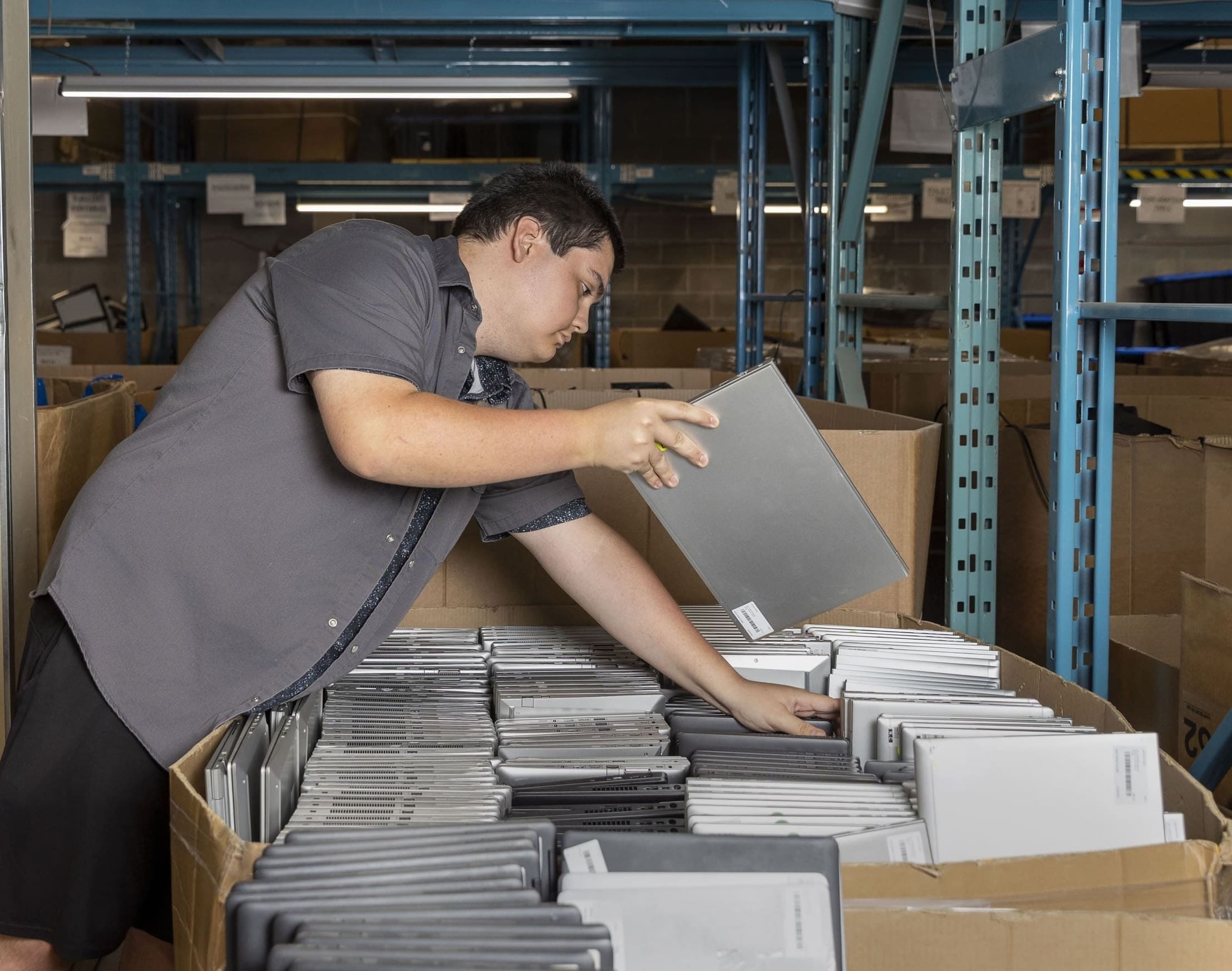

Canada’s digital transformation depends on people having the tools to participate.
Restoring federal support for Computers for Success (CFS) and preserving Government of Canada donations of reusable IT equipment would protect a national network that helps Canadians learn, work and access essential services.
In Saskatchewan, Emma, 16, was living away from home, without income, and trying to finish high school. Five days a week, she walked an hour to the library to do homework, then an hour home. A refurbished computer from CFS turned that journey into time to learn. Her experience shows what a federal budget decision can mean in a Canadian home.
After 32 years of impeccable service, Federal funding for Computers for Schools Plus and its youth internship stream ended abruptly on March 31, 2026 (despite a 2023 Government review which found the CFS+ was meeting or exceeding objectives).
The need did not go away.
Ottawa risks dismantling a partnership that preserves taxpayer value and puts affordable technology into Canadians’ hands.
A national partnership with lasting impact
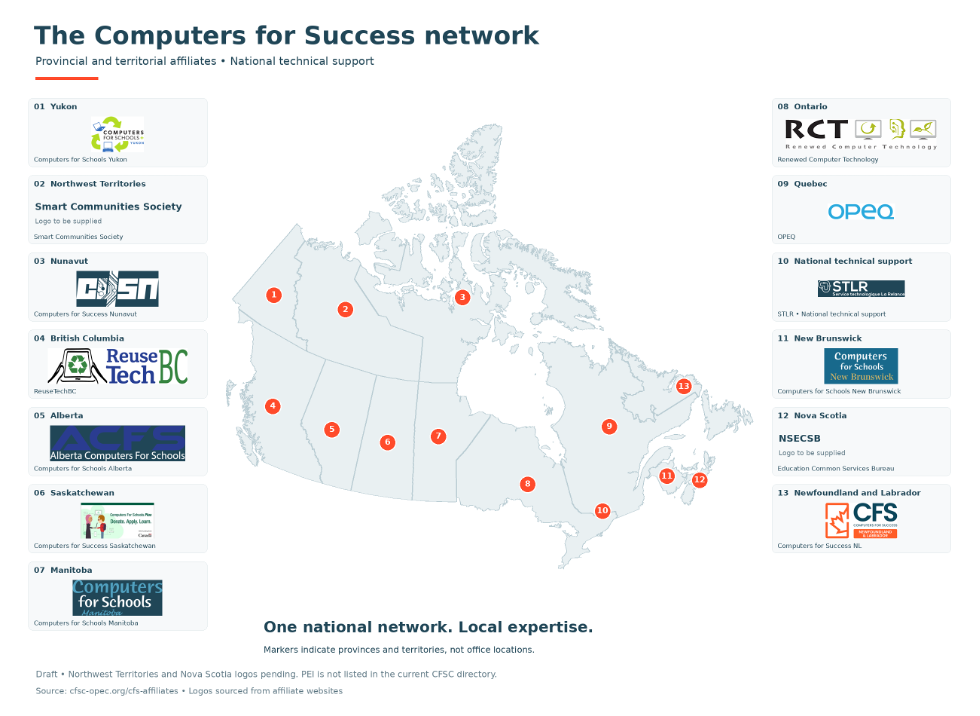
Now known as Computers for Success (CFS), the refurbishment network is present in every province and territory,connecting governments, industry and community organizations.
Its reach extends far beyond classrooms to low-income families, newcomers, refugees, Indigenous communities, seniors and people with disabilities. Community partners help equipment reach Canadians most at risk of digital exclusion.
Most computers provided are then shared with one or more people in the family or community, which multiplies the effect of each device.

Digital access requires more than a connection
Margaret, a grandmother raising her grandchild, had gone two years without a working laptop because she could not afford a replacement. Writing letters and doing research solely on her phone was a struggle. Receiving a computer through CFS brought relief: “I will be able to file my taxes online again.”
Her experience exposes a gap in Canada’s digital transformation. Moving services online does little for someone who cannot afford the tools to access them. A smartphone cannot adequately replace a computer for school work, job retraining, complex applications or navigating government services.
Affordable internet matters. Through the Connecting Families Initiative, participating providers offer lower-cost service to eligible households. But a connection and a suitable device must work together. Supporting connectivity while allowing computer access to deteriorate leaves a gap in Canada’s digital inclusion efforts.
Even a household with one computer can struggle. A parent applying for work, a teenager completing assignments and a child attending an online activity may all need it at once. An appointment, training course or government application becomes a competing demand.
Computers open doors to learning and employment
In Lethbridge, refurbished computers helped Family Services establish a lab where newcomer youth learn digital skills. The lab also supports preparation for employment, from writing résumés to practising interviews. Access to equipment helps young people build a future in their new country.
Newfoundland educator Bill Doyle describes using Google Translate to communicate with astudent who arrived speaking no English. The student could ask questions andreceive answers immediately. CFS technology helped make classroom participation possible.
These experiences show why a computer’s resale or scrap price cannot capture its value. A device can support years of education, employment and access to services.
Donated equipment needs a functioning delivery network
Industry now supplies approximately half the CFS network’s equipment. Through the CFS CEO Pledge, co-founded by Microsoft Canada, telecommunications companies, banks, insurers and other businesses commit used technology to digital inclusion. These contributions multiply public investment.
But donated equipment does not refurbish itself. Secure data wiping, repairs, software, technical support anddistribution require trained people and functioning facilities. Federal funding sustains the capacity that turns a used laptop into a reliable computer in someone’s home.
Businesses provide equipment; community organizations identify needs; refurbishment teams prepare devices for their next users. Ottawa’s investment connects those contributions. Expecting donations alone to sustain this system overlookst he work required between receiving equipment and placing it in the hands of someone who needs it.
In British Columbia, when loss of funding and operating pressures led the CFS affiliate to charge small amounts for previously free laptops,immigrant and settlement organizations stopped requesting them, its executive director Mary-Em Waddington reports. Even refurbished equipment can be unaffordable to organizations serving people most in need

Protecting public value and a dependable equipment supply
CFS+has undergone repeated federal program evaluations, including in 2017 and 2023. ISED’s latest published evaluation of CFS+ and its internship program found that both programs met their performance objectives during the period reviewed, improving access to computer technology and reducing the environmental footprint of surplus electronic equipment.
The economics are compelling. Nearly 80,000 devices distributed in 2024–25 represent approximately $24 million inestimated device value, assuming $300 per computer. Applying the same average to 2.2 million devices yields an estimated $660 million in value for Canadians, before counting youth training, work experience and environmental benefits.
Cutting refurbishment funding does not eliminate the need for computers. It shifts costs to families, schools and community organizations.
The prospect of losing federal equipment donations compounds the funding threat. Removing both operating support and a major device supply would undermine a national partnership built over three decades. Industry cannot replace that volume overnight.
Any replacement arrangement for federal equipment must also demonstrate effective data sanitization, secure tracking and chain of custody. Apparent disposal savings should not come at the expense of accountability, privacy or public trust.
Government of Canada Digital Sovereignty may be at Risk
Moving federal IT equipment outside the Computers for Success (CFS) network could remove an important additional safeguard unless equivalent controls are verified. A 2010 audit by the Office of the Privacy Commissioner of Canada found that 458 of 1,093 computers donated by federal institutions —approximately 42%— had not been completely erased before reaching CFS. By contrast, all 414 randomly selected hard drivestested after CFS processing had been wiped. Although these historical findings do not establish current performance, they demonstrate the value of an additional sanitization and verification step. Any alternative recycling or refurbishment arrangement must provide equivalent safeguards, including verified data removal, secure transport and an auditable chain of custody. Without them, Ottawa risks exposing sensitive information, weakening accountability for retired assets and compromising Canadians’ privacy and trust.
Act now to keep affordable computers within reach
The CFS network has submitted a digital circular economy proposal to the Department of Finance, building on its established capacity and partnerships. The federal budget should protect the whole delivery system: refurbishment operations, youth work experience and a dependable supply of reusable equipment.
Restoring support would sustain industry contributions and help Canadians access opportunities that increasingly require a computer. Allowing this capacity tounravel would squander decades of public and private investment.
For Emma, that investment means doing homework at home. For Margaret, it means managing daily life and supporting her grandchild. For newcomer youth, it helps open a path into education, employment and community life.
MPs must act: fund the CFS network’s digital circular economy proposal in the federal budget and preservefederal donations of reusable IT equipment.
Canadians can help by asking their Member of Parliament to support both measures.
Canada’s digital transformation succeeds when Canadians can participate. The federal budget must put the tools within reach.
Feel free to contact us for more information.
Emma and Margaret are fictitious names. Their stories are based on accounts shared with the CFS network.

SUPPORT COMPUTERS FOR SUCCESS
Learn more
